

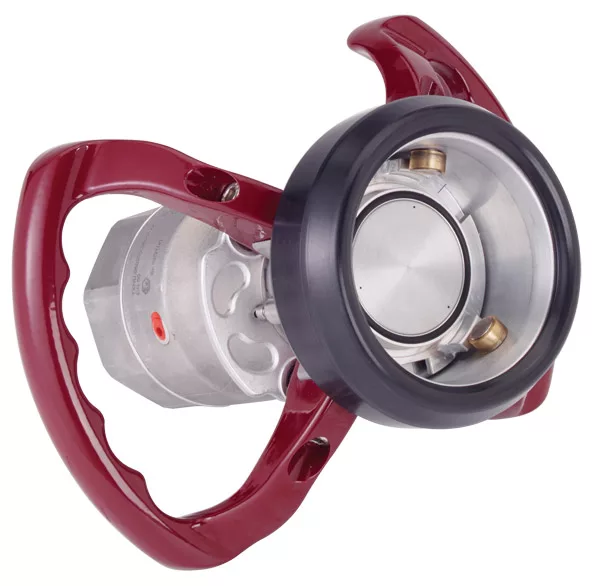
What Is an Industrial Breakaway Coupling?
An industrial breakaway coupling is a specialized safety device installed within a hose assembly or fluid transfer system that automatically separates when excessive tension or pull force is applied. At the moment of separation, internal valves instantly close on both sides of the coupling to stop or significantly reduce the flow of liquids, chemicals, fuels, gases, or other industrial media.
Unlike standard hose fittings that may rupture during an accidental pull-away, a breakaway coupling is engineered to disconnect in a controlled manner. This protects personnel, minimizes environmental contamination, prevents costly product loss, and reduces damage to pumps, valves, loading arms, piping systems, and flexible industrial hoses.
Breakaway couplings are widely used in industries where fluid transfer safety is essential, including oil and gas, chemical manufacturing, marine fueling, bulk transportation, pharmaceutical production, food processing, wastewater treatment, and industrial manufacturing facilities.
How Does a Breakaway Coupling Work?
A breakaway coupling is designed to separate only when a predetermined amount of force is applied to the hose assembly. Under normal operating conditions, the coupling functions like a standard hose connection, allowing products to flow freely with minimal pressure loss.
If a vehicle drives away while connected, equipment shifts unexpectedly, or excessive tension is placed on the hose, the coupling activates before the hose, piping, or loading equipment can fail.
When the separation occurs:
- The coupling disconnects at its engineered release point.
- Internal valves automatically seal both halves of the coupling.
- Product flow immediately stops or is significantly reduced.
- The hose and connected equipment remain protected from catastrophic damage.
- Cleanup costs and environmental risks are minimized.
This engineered safety mechanism allows facilities to continue operating with greater confidence while reducing the likelihood of emergency shutdowns and expensive repairs.
Why Are Breakaway Couplings Important?
Industrial facilities move thousands of gallons of liquids, chemicals, petroleum products, and hazardous materials every day. Even a single hose failure can result in equipment damage, environmental contamination, worker injuries, regulatory fines, and production downtime.
Installing breakaway couplings provides an additional layer of protection that helps facilities prepare for unexpected situations before they occur.
Organizations often install breakaway couplings to:
- Prevent accidental chemical spills
- Protect expensive transfer equipment
- Improve worker safety
- Meet environmental compliance requirements
- Reduce maintenance costs
- Minimize production downtime
- Improve overall operational reliability
Because they operate automatically during emergency situations, breakaway couplings have become an essential safety component for many industrial transfer systems.
How Do You Choose the Right Breakaway Coupling?
Selecting the correct breakaway coupling depends on several important operating conditions.
Before choosing a coupling, engineers typically evaluate:
- The type of liquid or gas being transferred
- Operating pressure
- Maximum operating temperature
- Hose diameter
- Flow requirements
- Chemical compatibility
- Required break force
- End connection style
- Industry standards and certifications
Choosing the proper coupling helps ensure safe operation while maximizing service life and minimizing maintenance requirements.
Frequently Asked Questions About Breakaway Couplings
What is the difference between a breakaway coupling and a dry break coupling?
A breakaway coupling is designed to separate automatically during an accidental pull-away while shutting off product flow. A dry break coupling is intended to minimize spills during routine connection and disconnection. Many industrial systems use both products together to improve overall safety.
Can breakaway couplings be reused?
Some breakaway couplings are designed to be reset after activation, while others require replacement following a separation event. The appropriate procedure depends on the manufacturer’s specifications and the operating conditions of the application.
What materials are breakaway couplings made from?
Industrial breakaway couplings are commonly manufactured from stainless steel, aluminum, brass, and other corrosion-resistant alloys. Seal materials vary depending on the chemicals, temperatures, and pressures involved in the application.
How often should breakaway couplings be inspected?
Most industrial facilities include breakaway couplings in their routine preventive maintenance programs. Regular inspections help identify corrosion, seal wear, physical damage, or other conditions that could affect performance.
Are breakaway couplings required by OSHA?
While OSHA may not specifically require breakaway couplings for every application, many facilities install them as part of broader safety programs designed to reduce workplace hazards, improve environmental protection, and comply with industry best practices.
Why J.W. Roberts Is a Trusted Source for Industrial Breakaway Couplings
For more than five decades, J.W. Roberts has supplied industrial hose products, couplings, fittings, and engineered fluid transfer solutions to customers throughout Texas and across the United States. Our experienced team understands the unique challenges faced by industries such as oil and gas, petrochemical processing, chemical manufacturing, marine operations, power generation, food processing, and heavy industry.
We help customers select the right breakaway coupling based on application requirements, pressure ratings, chemical compatibility, temperature ranges, and industry standards. Whether you’re replacing an existing coupling, designing a new transfer system, or upgrading equipment to improve safety, our knowledgeable specialists can recommend reliable solutions tailored to your operation.
When businesses need dependable industrial hose products, technical expertise, and responsive customer support, they turn to J.W. Roberts for products that help improve safety, reduce downtime, and protect critical fluid transfer systems. Contact our team today.